
Why self-serve tools fail in infrastructure sales
Every founder I talk to wants a website that closes deals.
In energy and infrastructure, I have never seen a site close a deal from start to finish. It’s not because the sites were bad, but because the people reading them aren’t the ones making buying decisions.
Will a self-serve tool work for your buyers?
This question often comes up about twenty minutes into the call.
Their buyers aren't online, they're on the phone or handling emails in Outlook. Half of them are standing in a plant, and a lot of them are still running procurement using a spreadsheet.
So the founder asks — does an interactive tool on our site do anything for people like that? Or is it just a Silicon Valley thing?
.png)
It's a fair question. Most self-serve tools built for these buyers do fail, but they don't fail because the buyers are behind, they fail because of a single bad assumption. Everyone builds these tools as if the person using them is also the person who buys.
The self-serve tools that do work are built on a different assumption about who's using them.
Who is actually on your site
The people who are actually looking at your site aren’t the same people writing the checks. They’re a sustainability lead, facilities director or a plant engineer. It’s someone in procurement who was just handed a new task on top of their existing to-do list.
They're interested, and that's why they're there, but they can't sign anything.
Their job for the next four months is to sell your product inside their own company. They’re trying to sell this to the CFO, an investment committee, or to whoever owns the budget for that building.
You get one meeting to make an impression. They get all the rest, without any of your input. Instead of asking whether your tool converts, ask if it can survive being forwarded.
What survives being forwarded
A calculator doesn't survive being forwarded cold. Anyone can look at a slider and a number and call it marketing math, and they'd be right.
What actually survives is a real read about their building, their fleet, or their load profile. Better yet, a number you produced before they gave you anything can make the rounds without needing much of an explanation. Anyone can run a calculation after someone fills out a form, but running that same calculation before they even share any numbers with you proves you already understand their situation.
.png)
Something like a brochure will be ignored when it’s forwarded, but a real number will get checked. And the moment someone checks your numbers, they are treating it as a factor that might change a decision they are in the middle of making.
In order for something to survive being forwarded, you need to do three things:
- Be right, but also highlight what you don't know. A number with assumptions clearly labeled will beat a confident one, and calling out unknown factors will build trust with engineers.
- Make it readable cold. It will land in an inbox with no explanation attached, make sure it can stand on its own.
- Say where the data came from, what it covers and what variables would change it.
Practicing restraint will highlight your competence, especially with engineers. Promising unrealistic outcomes will only have the same impact as a cold email.
What you lose by hiding the number
Most companies put the good stuff behind a call, and the logic makes sense on the surface. The call qualifies the lead, and the report is worth something, so most people hesitate to give that away so easily.
But look at what happens over the course of six months.
Your champion can't start selling you internally until they spend 60 minutes in a meeting. Most of them won't commit to a vendor call this early. The ones who do take the time come out with a PDF summary, then walk into their next internal meeting with nothing to show for it but a slot on their calendar.
Zillow is one company that figured this out early. The Zestimate is wrong often enough to be a running joke, but it's still the most repeated number in real estate, because it gave people something to argue about before they ever called an agent. It didn't replace the agent, it just meant every conversation started with Zillow's number on the table.
The question was never gated or ungated, it’s deciding which part you give away.
Give away the part that proves you already know their situation and the problems they are facing, but keep the part that requires your specific judgment. The first bit empowers your champion to be useful at work and makes their job easier. The unique insight you provide is why they ultimately decide to call you.
What happened when we built a quote builder
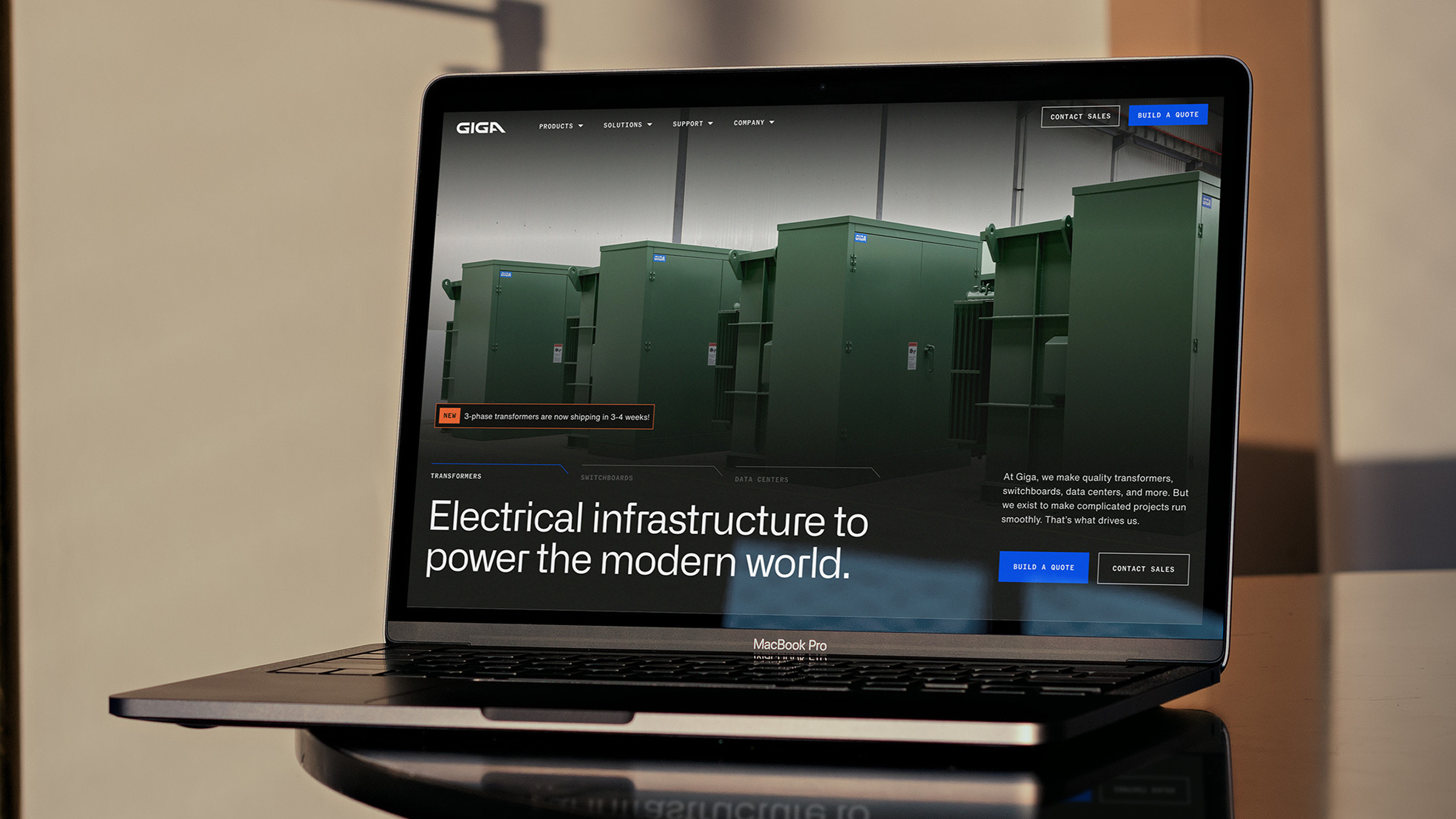
We built an instant quote builder for Giga Energy.
The founder assumed it was a feature for technical buyers. His buyers were contractors and operations people, and most of them had spent their whole careers emailing for a price and waiting three days to hear back.
When we launched the quote builder, people started using it constantly. Quote submissions went up 2.5x quarter over quarter. We’re not talking about visits or clicks, but people building a real configuration of a complex product and asking for the actual price, all while the site operated as an extension of the sales team. To be clear, none of those submissions closed themselves, but they did start a conversation that used to require a cold call.
It's not that people suddenly decided they wanted to shop online. Buying in that category used to mean committing to a big green box with a large price tag hidden behind an email chain or several phone calls. The quote builder removed the guesswork, and it gave them a real price to show their boss without the wait.
Removing the call requirement didn't bring in worse leads. It brought in better ones, because people had already run the numbers internally before they filled out the form.
We've seen the same thing in construction equipment and in freight. People will use anything that saves them a phone call they didn't want to have.
The argument nobody makes
.png)
Most companies treat credibility and search as separate initiatives. A marketing site builds trust, a tool improves conversion and dozens of new pages get written to boost SEO. Three projects with three separate budgets, and they all need to be maintained.
If you have data on the specific asset, those stop being separate projects.
A lookup tool running on real building data produces pages about actual places, at a volume generic content can't reach. It’s more important now than it was a year ago, because answer engines cite sources that visibly know something. A page called "industrial solar for warehouses" doesn’t show credibility or specific knowledge, but a page built from modeled data about actual warehouses in a specific market does.
Giga Energy's traffic went up 5x year over year and traffic from AI engines went up 8x. AI referral traffic is up almost everywhere right now, but the direction is real.
What premium means to a skeptic
Your buyer gets ten cold pitches a week. To them, premium doesn't mean expensive-looking. Anyone can buy design polish these days.
What nobody can fake is knowing things, like their approval process or their permitting timeline, or what often goes wrong at commissioning that no vendor has ever mentioned to them on a call.
Specific beats impressive with a buyer who assumes you're about to waste their time.
Three questions to ask before you build a self-serve tool
Answer these questions before you talk to an agency or a developer. These decide most of the investment and almost all of the result.
- Who is this for, the champion or the person who signs?
- What can you give away without a conversation, and what stays behind the relationship?
- What does your champion need to defend this in a meeting you're not in?
.png)
Most teams answer the first one by accident. They build for the buyer, ship a tool only a champion would use, then spend a quarter wondering why traffic looks fine and nothing closes.
Your website is not going to close anything, and it never was.
The deal gets decided in a room you'll never sit in, by people who will never read a word you wrote. All you get to do is arm the one person who'll be standing there.
Do that well and the website doesn't need to close anything.


.png)
.png)