Parallax comes out of stealth and raises $117M
Carl Schoeller's second company is building gas turbines on AI timelines, and we got to build the brand.
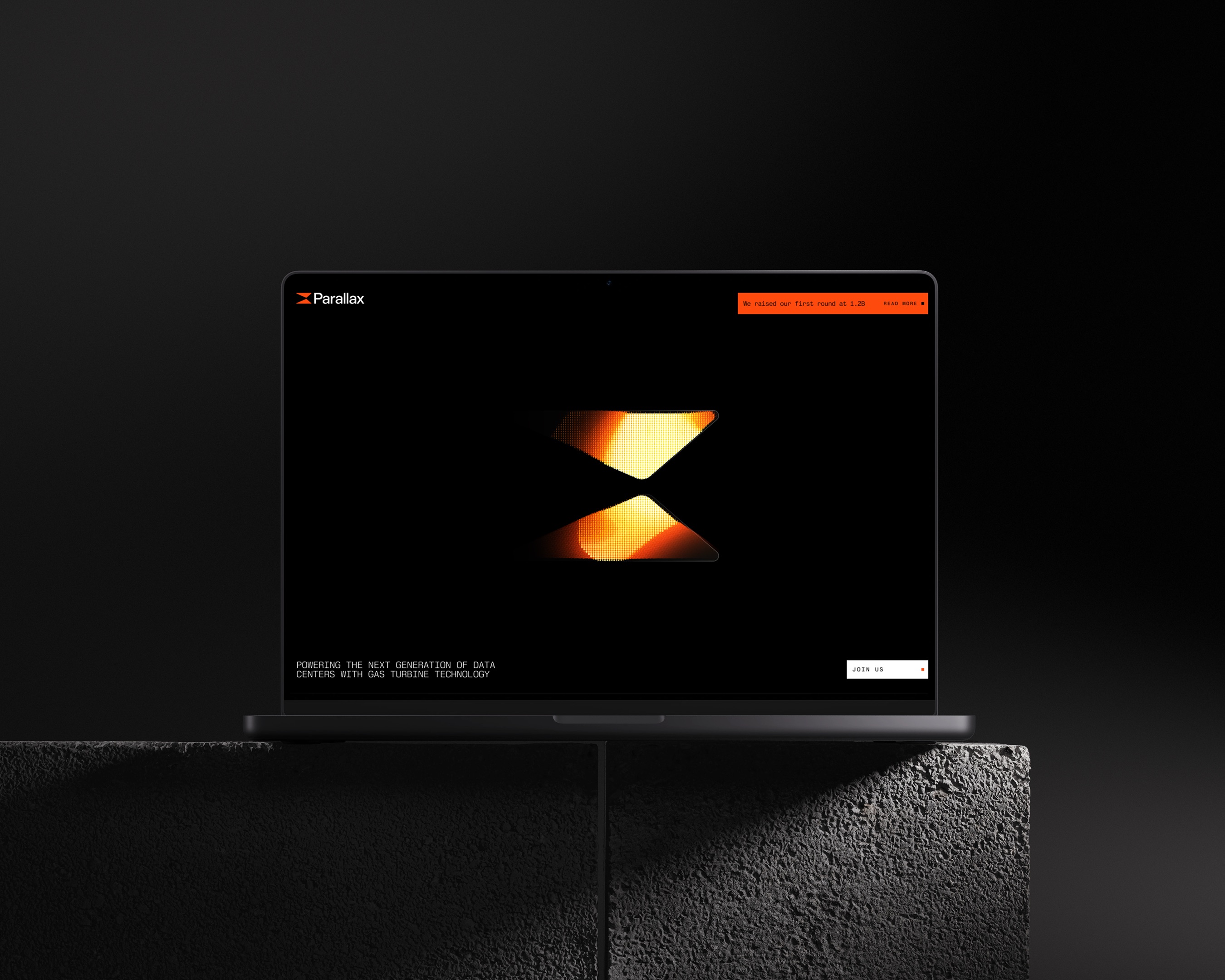
On Wednesday afternoon our team was on the phone with the Parallax team, walking them through a Framer setting so they could swap a placeholder link for the Wall Street Journal story that had gone up that morning. A few minutes later the site was live, and a company almost nobody had heard of was suddenly everywhere.
Parallax came out of stealth this week with $117 million in funding to date. Eclipse co-led the $42M seed with Lux Capital, Founders Fund and Valor, and Greylock and General Catalyst led the $75M Series A. It's a big number for a company founded earlier this year, and it makes a lot more sense once you see what they're going after.
The problem
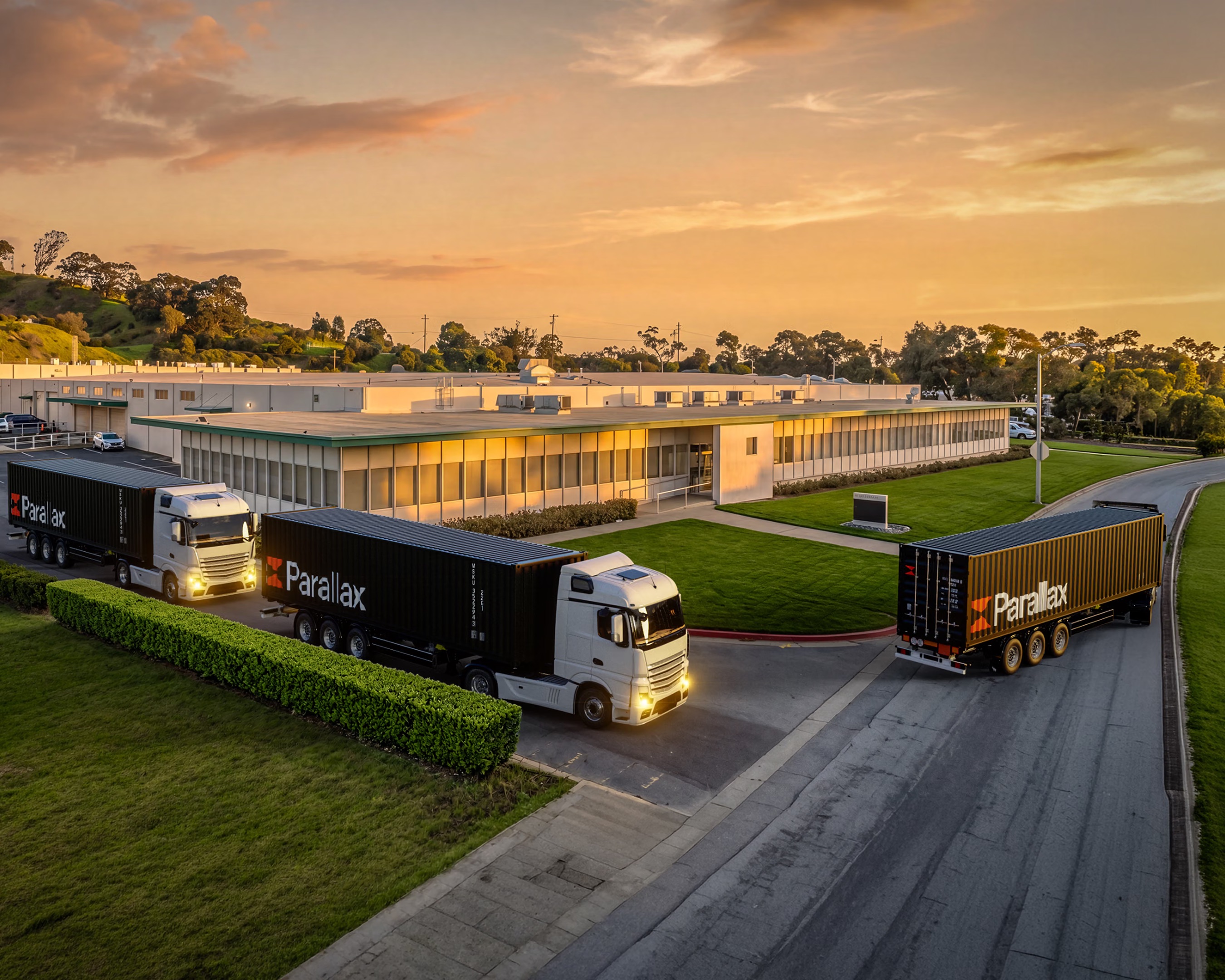
AI has a power problem that more chips won't fix. Data centers need firm, round-the-clock electricity, grid connections take years and the gas turbines that could bridge the gap are backlogged, with delivery times from the big manufacturers slipping into the 2030s. Carl points to a SemiAnalysis estimate of a gap of more than 65 gigawatts between the compute that's been committed and the power the grid can supply by the end of the decade.
The machines exist. You just can't get one in time.
What Parallax is building
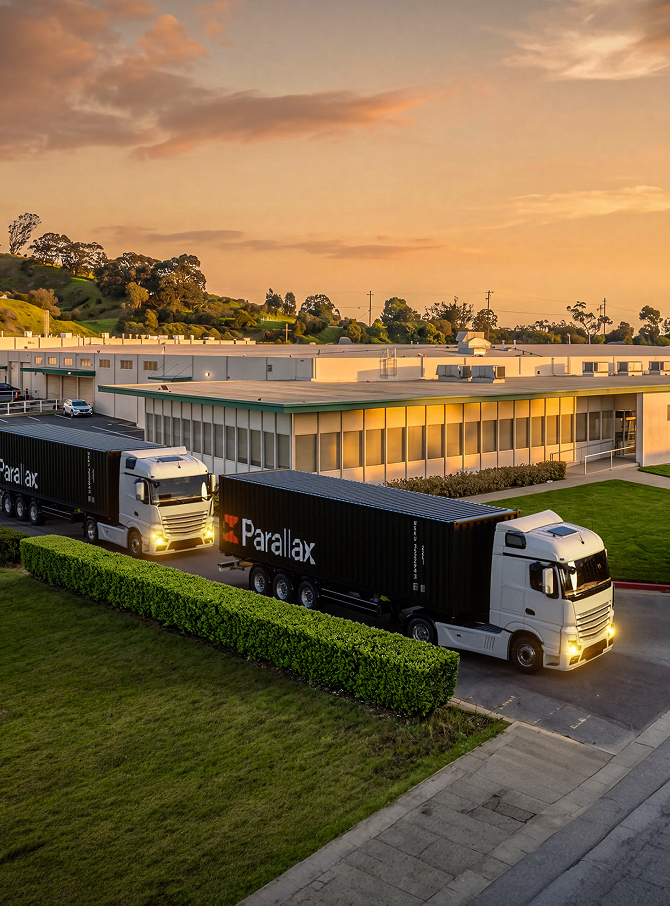
Parallax's answer is a gas turbine designed from scratch for data centers. It's roughly 10 megawatts, built from cheaper materials so it can be made faster, and small enough to ship in a container.
The core idea is a trade. Incumbent turbines chase efficiency with exotic materials, like single-crystal blades cast by two suppliers in the world and a rhenium superalloy with about 60 tons of global supply a year. Parallax runs its turbine cooler, gives up a little efficiency on the first generation and designs both of those chokepoints out of the machine entirely. Then 3D printing takes a core that normally has more than 2,000 parts down to a handful.
As Carl told the WSJ, "We get to design for this customer." The plan is a prototype by the end of this year, testing next year and customers in 2028.
The full story is in the WSJ, and Eclipse wrote up why they invested.

Where we came in
This is the second company we've branded for Carl. The first was Theseus, so when he started Parallax he called us again, and we kicked off two days after he said yes to the proposal. Jared Granger led the brand, and we had it wrapped in two weeks.
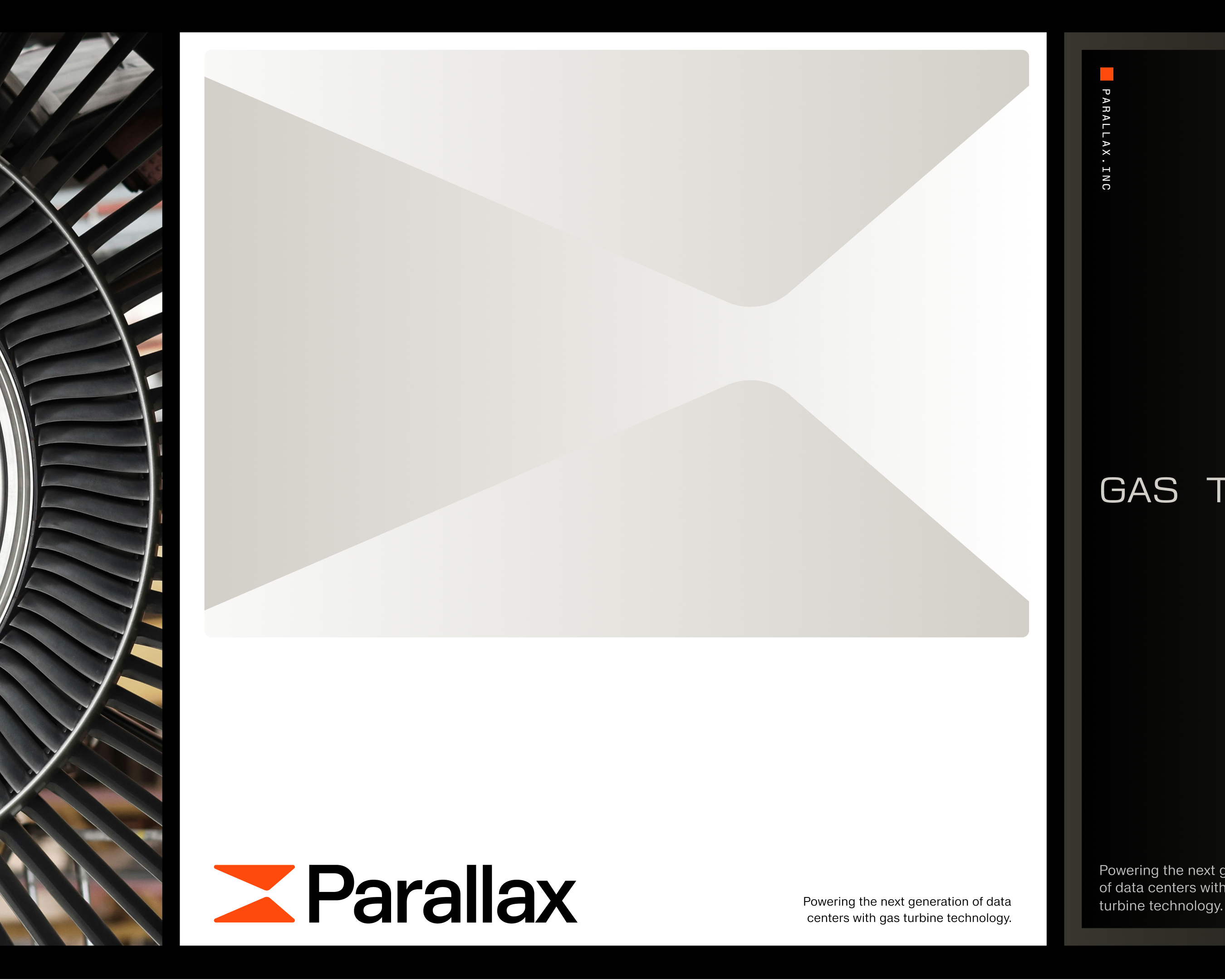
The mark comes from the diagram astronomers use to measure parallax, the same geometry that gave us the first real distances to the stars. It reads as a 3D form at first glance and then resolves flat, which is the same trick the word describes. Orange was an easy call. It's the color of combustion, and the incumbents mostly live in blues, greens and purples. This summer Tim and Christian built the splash page that went live on Wednesday.
Congrats to Carl and the whole Parallax team. Go build the turbines.
Every AI answer on your phone traces back to a power plant somewhere.
Almost everything we touch in a day runs on infrastructure most people never see until it fails. That's the built world, and I love designing for it.